Monday, May 30, 2011
New Series on Seniors Writing Novels
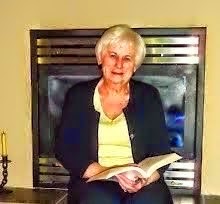
Today I’m beginning Part 1-A of what, I hope, will be an interesting series about writers who began their careers late in life, as I myself have done.
Associating with new writers in a variety of writing groups such as the ABNA (Amazon Breakthrough Novel Awards) Forum, Authonomy, and YouWriteOn, I’ve discovered that, like me, many of my colleagues are senior citizens. Men and women who had the desire to write but somehow life got in the way, until now. One of these is Maura Gallagher who writes under the nom de plume of Clue Gallagher. I am happy to have her as my first guest writer, in this series about senior storytellers. Clu’s book “Shattered Seeds: Sophia’s Story" is currently for sale on Amazon and Kindle.
Betty: Thank you for participating, Clu. You have an interesting story to tell, I know. I understand your name is actually Maura, which has a lovely Irish ring to it; but where did the nickname “Clu” come from?
Clu: I began writing at age 59. At the time, I had just about given up hope of ever having my former life back after being stricken with the devastating effects of Chronic Fatigue Syndrome and Fibromyalgia, which disabled me at age 54. One day, I became inspired after a new adult friend shared her life story with me. Her father had been a NAZI under Hitler. Since early childhood, a story had rattling around in my mind about a girl who became an immigrant to the U.S.A. That girl had no face, no name, no country, and no story.
After talking to my German immigrant friend, I sat down at the keyboard and started to write. The FM and CFS had taken away my memory. I strained to focus, trying to remember the particulars of the English language...then, this amazing thing happened to me. Suddenly, I began to find words and sentences to describe the life of a girl named Sofia Gunter. I used every scrap of energy I could muster to write the first MS, astounding myself more than anyone. I asked my mother to read that first manuscript and she said that she stayed up all night reading it. Shortly afterwards, she saw an article in the Pittsburgh Post-Gazette about a competition on Amazon.com. She told me that I should enter the MS then called “The Quilt.”
After deciding to enter the first ABNA competition in 2008, I used the pen name of ‘R.E. Cluse.’ I arrived at that name by using my beloved father’s initials, “R.I.E.” and the first word that came to mind was “Recluse.” It seemed to fit my new lifestyle, since becoming disabled from my career as an Elementary Art Teacher for almost 28 years.
I met a wonderful group of writers on the ABNA forum and they befriended me. Several—in particular, Shye Mendelsohn and Erica Olsen—helped to give me a new nickname and soon the all the members of the forum started referring to me as ‘CLU.’
Betty: Like myself, you are now a senior and yet this is your debut book. Did you always have it in mind to write a novel?
Clue: The desire to write a novel was my hidden secret starting in childhood; one I had stashed away securely, never really sharing it with anyone. I trained as an artist and became an art teacher in the public school system. However, I always loved to write and, at one point, I was going to go to college to major in English and Creative Writing. I didn’t come from a wealthy family, so I waited to go to college until I was able to save enough money. I had good typing and accounting skills and worked as a secretary. Up until then, I had never had an art class in my life, and I had a burning desire to have some instruction in the visual arts. I enrolled in Carnegie Mellon University evening classes and studied painting and drawing. I fell in love with the Arts and knew that I needed to make them my life work. Herbert Olds, a professor at Carnegie took an interest in me and my work and guided me to a state university that I could afford. His teaching showed me how valuable it is to anyone in the Arts to surround themselves with others who want to share their thoughts, their expertise, and their experiences. However, in order to pay the bills with a secure paycheque, I devoted my life to the work of teaching children to appreciate the arts and to foster a wave of creative thinking for them. My dream of writing that “book” was put on the back burner...life’s journey seemed to have gotten in the way.
(To be continued: Next week, we’ll learn what motivated Clu to finally write that book and why she decided to self-publish. And I’ll include my Amazon review of Sophia’s Story)
Wednesday, May 18, 2011
Anniversary #48 Plus Another Great Book to Read
Very busy this week with celebrating our 48th Anniversary and continuing to edit my book plus reviewing for Amazon. So here is a picture from 48 years ago followed by my review of another great and fascinating book:
“Dreams of Joy” is the story of young Joy Louie who leaves her comfortable home in Los Angeles Chinatown for the People’s Republic of China to find both her birth father and what she thinks will be a better way of life. Her association with a communist group at the University of Chicago has led her to believe that socialism isn’t the evil the United States government portrays it to be.
Since her birth father is a well-known artist in Shanghai, in spite of government restrictions, it is fairly easy for her to find him; and after his initial shock of discovering he has a daughter, he seems happy to know her. She travels with him to the village of Green Dragon where she joins the commune and falls in love with a young peasant farmer.
In 1958, Mao announced the” Great Leap Forward,” an attempt to increase agricultural and industrial production. However, three years of floods and bad harvests as well as poor farming methods, severely damaged levels of production. The famine that occurred reportedly resulted in 4.5 million fatalities. The author masterfully transports us to that village and shows us in startling detail the horrors that result from this famine. Her attention to detail is wonderful and, while the book isn’t a page-turner in the sense of a thriller, I was spellbound by the history of a period in China that has always fascinated me.
Although “Dreams of Joy” is actually the sequel to “Shanghai Girls,” which I have never read, I found it stands alone quite well. Now, having discovered Lisa See’s writing, I will certainly go back and read the prequel as well as some of her earlier books. Ms. See is a skilful author who has the ability to transfer the reader to the exotic places she writes about.
“Dreams of Joy” is the story of young Joy Louie who leaves her comfortable home in Los Angeles Chinatown for the People’s Republic of China to find both her birth father and what she thinks will be a better way of life. Her association with a communist group at the University of Chicago has led her to believe that socialism isn’t the evil the United States government portrays it to be.
Since her birth father is a well-known artist in Shanghai, in spite of government restrictions, it is fairly easy for her to find him; and after his initial shock of discovering he has a daughter, he seems happy to know her. She travels with him to the village of Green Dragon where she joins the commune and falls in love with a young peasant farmer.
In 1958, Mao announced the” Great Leap Forward,” an attempt to increase agricultural and industrial production. However, three years of floods and bad harvests as well as poor farming methods, severely damaged levels of production. The famine that occurred reportedly resulted in 4.5 million fatalities. The author masterfully transports us to that village and shows us in startling detail the horrors that result from this famine. Her attention to detail is wonderful and, while the book isn’t a page-turner in the sense of a thriller, I was spellbound by the history of a period in China that has always fascinated me.
Although “Dreams of Joy” is actually the sequel to “Shanghai Girls,” which I have never read, I found it stands alone quite well. Now, having discovered Lisa See’s writing, I will certainly go back and read the prequel as well as some of her earlier books. Ms. See is a skilful author who has the ability to transfer the reader to the exotic places she writes about.
Sunday, May 1, 2011
I Remember Mama
Today I’m going to be a little controversial. Recently I had a discussion with someone who doesn’t believe in spanking children at all anymore. Apparently, in many places, there is actually a law against it. Personally, while I certainly don’t believe in beating a child or being overly harsh with them, I got the odd spanking when I was a kid and I never felt it did me any harm.
This particular F/B acquaintance stated that because I admitted my mom smacked me on the bottom when I was about 14, there was “definitely” something wrong with our relationship. Trust me, the only thing wrong was that I had a “big mouth,” as we used to call being disrespectful; and my mother, an ex schoolteacher, was not about to put up with that. I remembered it but never resented it. In fact, I loved my mother very much and the two of us had an excellent relationship throughout our lives.
Moms tend to get special recognition in the month of May; although they definitely deserve it all year long. While my mother passed away 25 years ago, there is hardly a week goes by that I don’t think about some of the wonderful times we had together. The fact that she was a teacher gave her a special understanding about children, I think. During my teen years, many of my girlfriends would come over to our house to ask my mother questions about things they were reluctant to speak to their own parents about. In those days, mothers didn’t need to work as much as they do today, so she was always there with milk and cookies and good advice.
She was a very spiritual woman and a firm believer in the Bible. She taught me to love and respect our Creator. Even so, she had a wonderful sense of humour and could see the fun in almost any situation.
By the time I married, my mother was a widow, so my husband and I built a house on half of her one acre of land. We lived next door to each for the next twenty years. It was a wonderful arrangement and she never overstayed her welcome or came between my husband and me. In fact, if she happened to be at our place when he drove in from work, she would “sneak” out the back door before he came in the front. “I don’t want him to get tired of me,” she would say.
I remember early in our marriage, when I was particularly angry with him about something, I went over to her house for a cup of tea. When I started to complain about him, she was displeased. “You are fortunate to have such a man,” she stated. “And I don’t EVER want to hear another word against him.” She never did.
In her later years, my mother loved to travel. She had no qualms about going off on her own and even undertook a three-week tour to the orient all by herself. By the time she turned eighty, however, I started to worry about her traipsing around the world alone, and my husband suggested that I go with her on a few trips.
She was born in Scotland but left when she was ten years old and had never been back to her homeland. We went together and what a joy it was to see her delight as we walked down the High Street of her small village with her pointing out where everything should be. It was amazing that in the seventy years since she left, very little had changed.
She lived to be 85 and, because we were right next door, never had to leave her own house. I’ve always been glad that I gave her that privilege. In the spring of 1986, she was diagnosed with pancreatic cancer and given only a few months to live. I wanted to be the one to look after her so I resigned from my job as a tour planner and moved into her house. We were together until the week before she died when she needed more care than I could give.
I’m so happy that I had all those wonderful years with my mother and I’m very grateful that she gave me the odd spanking when I needed discipline. I learned obedience and respect; things that are sadly lacking in many young people today.
This particular F/B acquaintance stated that because I admitted my mom smacked me on the bottom when I was about 14, there was “definitely” something wrong with our relationship. Trust me, the only thing wrong was that I had a “big mouth,” as we used to call being disrespectful; and my mother, an ex schoolteacher, was not about to put up with that. I remembered it but never resented it. In fact, I loved my mother very much and the two of us had an excellent relationship throughout our lives.
Moms tend to get special recognition in the month of May; although they definitely deserve it all year long. While my mother passed away 25 years ago, there is hardly a week goes by that I don’t think about some of the wonderful times we had together. The fact that she was a teacher gave her a special understanding about children, I think. During my teen years, many of my girlfriends would come over to our house to ask my mother questions about things they were reluctant to speak to their own parents about. In those days, mothers didn’t need to work as much as they do today, so she was always there with milk and cookies and good advice.
She was a very spiritual woman and a firm believer in the Bible. She taught me to love and respect our Creator. Even so, she had a wonderful sense of humour and could see the fun in almost any situation.
By the time I married, my mother was a widow, so my husband and I built a house on half of her one acre of land. We lived next door to each for the next twenty years. It was a wonderful arrangement and she never overstayed her welcome or came between my husband and me. In fact, if she happened to be at our place when he drove in from work, she would “sneak” out the back door before he came in the front. “I don’t want him to get tired of me,” she would say.
I remember early in our marriage, when I was particularly angry with him about something, I went over to her house for a cup of tea. When I started to complain about him, she was displeased. “You are fortunate to have such a man,” she stated. “And I don’t EVER want to hear another word against him.” She never did.
In her later years, my mother loved to travel. She had no qualms about going off on her own and even undertook a three-week tour to the orient all by herself. By the time she turned eighty, however, I started to worry about her traipsing around the world alone, and my husband suggested that I go with her on a few trips.
She was born in Scotland but left when she was ten years old and had never been back to her homeland. We went together and what a joy it was to see her delight as we walked down the High Street of her small village with her pointing out where everything should be. It was amazing that in the seventy years since she left, very little had changed.
She lived to be 85 and, because we were right next door, never had to leave her own house. I’ve always been glad that I gave her that privilege. In the spring of 1986, she was diagnosed with pancreatic cancer and given only a few months to live. I wanted to be the one to look after her so I resigned from my job as a tour planner and moved into her house. We were together until the week before she died when she needed more care than I could give.
I’m so happy that I had all those wonderful years with my mother and I’m very grateful that she gave me the odd spanking when I needed discipline. I learned obedience and respect; things that are sadly lacking in many young people today.
Thursday, April 21, 2011
Armchair Travelling


I have always loved to travel and, up-to-now, I still find it wonderful. But the last couple of trips have shown my husband and myself that we won’t be able to do it forever. It gets a little more difficult with each passing year; although my mother was still going strong in her 80s.
Just in case the time comes when we must content ourselves with armchair travelling, I’m slowly obtaining a collection of travel guides, which, aside from the internet, may just be the next best thing. In that regard, Amazon sent me a lovely Fodor guide for reviewing this month and I would like to pass along my thoughts on the book to my readers.
It’s “Fodor’s Guide to “Provence & the French Riviera.” I highly recommend it. Here is my review:
“Several years ago my husband I spent two glorious weeks exploring the southeastern area of France. From the Pont du Gard near Nimes, to the lemon center of Menton, next to the Italian border, the beauty and charm of the area enthralled us. Reading Fodor’s beautiful new guidebook entitled “Provence & the French Riviera” brings back all the excitement of a market day in a village like Gordes, or looking down at Monte Carlo from the heights of the Grande Corniche.
As much as we crammed into that two-week period, I wish I’d had this guidebook at the time. It shows us that there is so much more we actually missed that we are now ready to get on the internet and start booking our next trip.
I love how the book starts out with two pages of Top Experiences and then goes on to suggest several tours planned for those with special interests. For example, there is one called “The First Timer–The Best Two-Week Tour” which gives one two days at all the essential sites. Another lovely itinerary called “The Modern Art Route” takes you to see paintings by 20th century artists like Picasso and Matisse.
Of course, at the beginning they tell you what their ratings mean. The top rating is called Fodor’s Choice, which is indicated by orange stars throughout the book while black stars highlight sights, restaurants and properties they consider “Highly Recommended.”
The book is then broken down into areas: each one explaining the top cities to visit; top sights to see; top attractions to experience; along with things like Festivals, Nightlife and the Arts, Shopping, etc.
As usual in a Fodor Guide, there are beautiful full colour pictures and, with Province and the Cote d’Azur being such an amazing area to see, they have outdone themselves with these. Even if you can never visit this wonderful area of France, just reading the book will make you feel like you have experienced some of its delights.”
Wednesday, March 30, 2011
Latest Amazon Book Review
Hi. I'm sorry to be so late in posting this month, but I have been sick with the flu most of the month. It seems at this age, along with a compromised immune system, I get hit hard and once the coughing starts, it's difficult to get past it. Never mind. It's all part of the aging process and we just deal with it to the best of our ability.
Here is a book I found most enjoyable. I've posted this review in my Amazon Vine Account.
"A historical fiction writer has a definite edge over a true historian and this is where some readers of historical fiction tend to get confused. The writer of historical fiction has the versatility of verisimilitude: the appearance or semblance of truth. As Mark Twain once said, "the difference between history and fiction is that fiction has to (only) be believable." In other words, it doesn't have to be exact historical truth. In his new novel, "The Tudor Secret," author, C.W. Gortner uses this device to good effect and makes an unlikely plot seem plausible.
Brendan Perscott is an orphan reared in the household of the dangerous and cunning family of Lord Robert Dudley. He has never known who his parents were and is eager to find the secret of his ancestry. As well, he wonders what ever happened to the warm and loving household servant who raised him and was, according to Lady Dudley, killed in a roadside ambush.
Now twenty years of age, he is sent to the court of Edward VI to serve as a square to the young Robert Dudley. However, as soon as he meets the Lady Elizabeth, King Edward's sister by Anne Boleyn, he knows he is her liegeman. He would serve only her and to shield her from the Dudley Family, he joins forces with William Cecil, Elizabeth's protector.
With the exception of what I consider to be Philippa Gregory's revisionist history, I have a great fondness for books set in the Tudor era and especially about members of the royal family. I found Mr. Gortner's writing quite compelling and I quickly was caught up both with the characters he introduces and his young hero's dilemma.
Only towards the end of the book, in a scene with Cecil William, did I find the writing went a little overboard and the young man's outbursts rather exaggerated. What had happened didn't seem to warrant his reaction. Nevertheless, I enjoyed the book and found it an engrossing read."
Here is a book I found most enjoyable. I've posted this review in my Amazon Vine Account.
"A historical fiction writer has a definite edge over a true historian and this is where some readers of historical fiction tend to get confused. The writer of historical fiction has the versatility of verisimilitude: the appearance or semblance of truth. As Mark Twain once said, "the difference between history and fiction is that fiction has to (only) be believable." In other words, it doesn't have to be exact historical truth. In his new novel, "The Tudor Secret," author, C.W. Gortner uses this device to good effect and makes an unlikely plot seem plausible.
Brendan Perscott is an orphan reared in the household of the dangerous and cunning family of Lord Robert Dudley. He has never known who his parents were and is eager to find the secret of his ancestry. As well, he wonders what ever happened to the warm and loving household servant who raised him and was, according to Lady Dudley, killed in a roadside ambush.
Now twenty years of age, he is sent to the court of Edward VI to serve as a square to the young Robert Dudley. However, as soon as he meets the Lady Elizabeth, King Edward's sister by Anne Boleyn, he knows he is her liegeman. He would serve only her and to shield her from the Dudley Family, he joins forces with William Cecil, Elizabeth's protector.
With the exception of what I consider to be Philippa Gregory's revisionist history, I have a great fondness for books set in the Tudor era and especially about members of the royal family. I found Mr. Gortner's writing quite compelling and I quickly was caught up both with the characters he introduces and his young hero's dilemma.
Only towards the end of the book, in a scene with Cecil William, did I find the writing went a little overboard and the young man's outbursts rather exaggerated. What had happened didn't seem to warrant his reaction. Nevertheless, I enjoyed the book and found it an engrossing read."
Monday, February 21, 2011
My Oscar Picks
Just got back from our winter vacation but won’t be discussing that this time. This is Oscar week and for the first time in quite a few years, I’m really pulling for one movie and its stars. I don’t go to theatres to see movies often anymore—mostly wait to rent them from either our cable server or a rental shop. However, our hotel in Anaheim was close to a theatre and since we were tired from a full day at Disneyland, we decided to rest the following day by seeing “The King’s Speech.”
Most people still remember the Queen Mother, Elizabeth; however no one born later than the 1950s will remember much about King George VI. I was 15 when he died and while we didn’t yet have television, he was often featured in the newsreels at the movies, so I feel I knew him quite well. His bravery in staying in London during World War II, to give courage to his subjects, made him well loved both in England and abroad. There was no doubt about his feelings for his wife; theirs was definitely a love match and the queen never forgave her brother-in-law for his abdication which forced her husband into a much more public life than he desired.
Colin Firth is far better looking than I remember the king being. He had rather a thin, worried face and Colin is exceedingly handsome. But the portrayal of the King’s speech problem is superb and the supporting actors are equally fantastic. So come Sunday, I’ll be rooting for “The King’s Speech” to take home several of those little gold statues. I’ll be sorely disappointed if they don’t.
Most people still remember the Queen Mother, Elizabeth; however no one born later than the 1950s will remember much about King George VI. I was 15 when he died and while we didn’t yet have television, he was often featured in the newsreels at the movies, so I feel I knew him quite well. His bravery in staying in London during World War II, to give courage to his subjects, made him well loved both in England and abroad. There was no doubt about his feelings for his wife; theirs was definitely a love match and the queen never forgave her brother-in-law for his abdication which forced her husband into a much more public life than he desired.
Colin Firth is far better looking than I remember the king being. He had rather a thin, worried face and Colin is exceedingly handsome. But the portrayal of the King’s speech problem is superb and the supporting actors are equally fantastic. So come Sunday, I’ll be rooting for “The King’s Speech” to take home several of those little gold statues. I’ll be sorely disappointed if they don’t.
Saturday, January 22, 2011
My Novel and Why I WroteI It.
They say “if you can't find the novel you would like to read, write it yourself.” Which is why I have written a novel based on my family history research. I based my novel on the few facts I had about my Huguenot ancestors and pretty well imagined the rest. Before I started to write my book, I visited the ancestral places in France and England and saw with my own eyes the village where my people originated.
The story is the way I would like to think it happened. I feel that, in a time when there are still places in the world where a man can't follow his own conscience, it has an important message for us all. I hope others find it exciting and informative.
“What is a Huguenot?” people often ask me when I tell them about my novel. Although there are still members of this early Protestant group worshipping today, they are no longer well known. In 16th century France, Huguenot was the name given to those who came to follow the teachings of Jean Calvin. The Protestant Reformation, began by Martin Luther in Germany, spread rapidly to France. However, as it grew in that country, it abandoned the Lutheran viewpoint and took to heart the beliefs of Dr. Calvin. Primarily it rejected much of what the Catholic Church stood for.
Calvin’s major doctrine was that, even prior to birth, all men are divided between the few who are saved and the many who are damned to hellfire. Those damned are without benefit of salvation, even by faith. It is their destiny. It was a very strict philosophy and most believers in those days saw all conduct in black and white. There were no grey areas. They also believed that wealth and position in the community were proof of their being part of the Elect, the Heavenly class.
Whatever one thinks of their doctrine, we can only admire the faith and endurance they showed, when in October of 1685, after almost one hundred years of religious freedom, King Louis XIV decreed they recant their beliefs or die. Many historians have said that being in the large part, artisans, craftsmen and professional people; they were some of the brightest and best of France’s population. Countries such as Holland, England, South Africa and even the English colonies in North America welcomed them with open arms and so, at great risk to themselves and their families as well as those who helped them, they fled from their homeland. Consequently, French society suffered a substantial loss.
Centuries ago wise King Solomon stated, “man dominates man to his injury.” So much of our history proves this to be true and in many parts of the world, it is still a sad fact. One interesting historical detail is that many Catholics, not liking the decision of King Louis to eradicate these people, put their own lives on the line to help their friends get to safety.
However they managed it, my own ancestors made their way to London where they shaped admirable lives for themselves. In the novel, the hero, Pierre Garneau, tends to be typical of Huguenot philosophy in his beliefs and behavior. I am happy to say that over the period of the story, he learns moderation in his judgments and enough wisdom to realize his own shortcomings.
In the next month or two I’m publishing this novel on CreateSpace. I’ll have more to say about this experience later.
The story is the way I would like to think it happened. I feel that, in a time when there are still places in the world where a man can't follow his own conscience, it has an important message for us all. I hope others find it exciting and informative.
“What is a Huguenot?” people often ask me when I tell them about my novel. Although there are still members of this early Protestant group worshipping today, they are no longer well known. In 16th century France, Huguenot was the name given to those who came to follow the teachings of Jean Calvin. The Protestant Reformation, began by Martin Luther in Germany, spread rapidly to France. However, as it grew in that country, it abandoned the Lutheran viewpoint and took to heart the beliefs of Dr. Calvin. Primarily it rejected much of what the Catholic Church stood for.
Calvin’s major doctrine was that, even prior to birth, all men are divided between the few who are saved and the many who are damned to hellfire. Those damned are without benefit of salvation, even by faith. It is their destiny. It was a very strict philosophy and most believers in those days saw all conduct in black and white. There were no grey areas. They also believed that wealth and position in the community were proof of their being part of the Elect, the Heavenly class.
Whatever one thinks of their doctrine, we can only admire the faith and endurance they showed, when in October of 1685, after almost one hundred years of religious freedom, King Louis XIV decreed they recant their beliefs or die. Many historians have said that being in the large part, artisans, craftsmen and professional people; they were some of the brightest and best of France’s population. Countries such as Holland, England, South Africa and even the English colonies in North America welcomed them with open arms and so, at great risk to themselves and their families as well as those who helped them, they fled from their homeland. Consequently, French society suffered a substantial loss.
Centuries ago wise King Solomon stated, “man dominates man to his injury.” So much of our history proves this to be true and in many parts of the world, it is still a sad fact. One interesting historical detail is that many Catholics, not liking the decision of King Louis to eradicate these people, put their own lives on the line to help their friends get to safety.
However they managed it, my own ancestors made their way to London where they shaped admirable lives for themselves. In the novel, the hero, Pierre Garneau, tends to be typical of Huguenot philosophy in his beliefs and behavior. I am happy to say that over the period of the story, he learns moderation in his judgments and enough wisdom to realize his own shortcomings.
In the next month or two I’m publishing this novel on CreateSpace. I’ll have more to say about this experience later.
Labels:
family history,
Huguenots,
novel
Subscribe to:
Posts (Atom)